
Which Food Is Best for Hair Growth? Top Foods to Add to Your Diet
June 18, 2026
·
20 min read
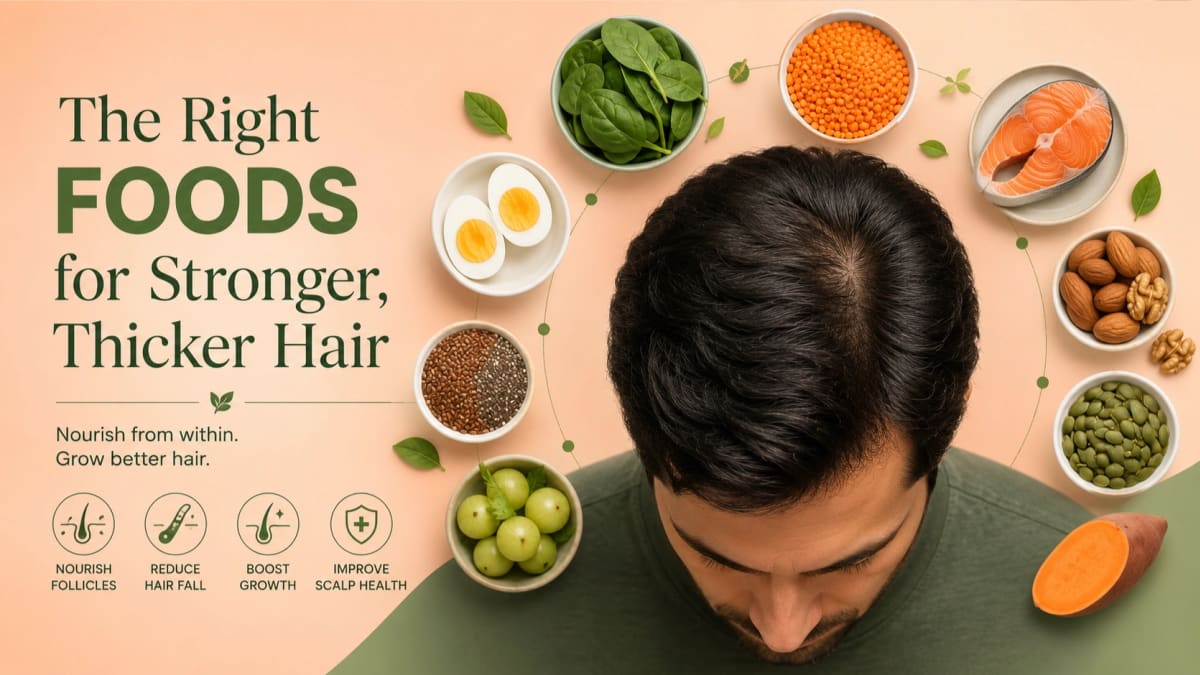
Table of Contents
- The Thing Nobody Tells You About Hair Growth Products
- Why Food Affects Hair Growth More Than Most People Expect
- The Nutrients That Matter Most And Why
- Hair Growth Foods List: What to Actually Eat
- What Should I Eat for Hair Growth on a Vegetarian Diet?
- Foods That Quietly Work Against Hair Growth
- How Long Before Diet Changes Affect Hair?
- Conclusion
- FAQs
The Thing Nobody Tells You About Hair Growth Products
Walk into any pharmacy or scroll through any e-commerce site and you'll find shelves of hair growth serums, supplements, and treatments all promising faster, thicker, longer hair. Some of them work, some of them don't, and most of them are expensive enough that the decision to buy feels significant.
What almost none of them tell you is that all of those products the serums, the supplements, even the clinically validated treatments work significantly better when the body has the raw materials it needs to actually build hair. And those raw materials don't come from a bottle. They come from food.
Hair is one of the fastest growing tissues in the human body. A single strand of hair grows approximately 1 to 1.5 centimetres per month. Across a full head of roughly 1,0,000 follicles, that represents an enormous amount of cellular activity happening continuously protein synthesis, cell division, keratin production, pigment generation. All of it requires nutrients. And when those nutrients are insufficient whether from a restricted diet, poor absorption, or simply not knowing what to eat for good hair growth the follicle slows down, produces weaker hair, or stops producing altogether.
This is not a marginal effect. Nutritional deficiency is one of the most common and most reversible causes of hair loss globally. And yet most people investigating their hair fall start with products and treatments without ever seriously examining what they're eating. That's the wrong starting point.
Why Food Affects Hair Growth More Than Most People Expect
The hair follicle is one of the most metabolically active structures in the body. It divides faster than almost any other cell type, which means it has one of the highest demands for nutrients particularly protein, iron, vitamins, and minerals relative to its size.
The follicle gets everything it needs through the blood supply. This is worth sitting with for a moment. Every nutrient that reaches your follicle travels through your bloodstream, which means it starts with what you eat. A diet consistently low in protein means the follicle doesn't have enough amino acids to synthesise keratin the protein that hair is made of at the rate it needs to. A diet low in iron means the haemoglobin carrying oxygen to the follicle is compromised, reducing the follicle's energy supply. Low Vitamin D, low zinc, low essential fatty acids each of these affects a specific aspect of follicle function in ways that show up as slower growth, thinner strands, or increased shedding.
The effect is always delayed, which is part of why people don't make the connection. The hair you are growing today reflects the nutritional environment your follicle had two to three months ago. Improve your diet now, and you won't see it in your hair for weeks. This delay makes cause and effect easy to miss. But it also means that improving your diet today is never too late the follicles are responsive and will show the improvement, just on their own timeline.
The Nutrients That Matter Most And Why
Before getting to the specific foods, it helps to understand which nutrients the follicle needs and what happens when they're missing. Because the right foods to eat for hair growth are the ones that supply these nutrients in the most bioavailable forms.
- Protein is the foundation. Hair is almost entirely made of a structural protein called keratin. Without adequate dietary protein, the body reduces protein allocation to non-essential structures and hair is not essential for survival. Protein deficiency causes the follicle to enter the resting phase early and produce progressively thinner, weaker strands. The minimum daily protein intake for adequate hair support is around 50 to 60 grams per day more if you're active.
- Iron (and specifically ferritin) is consistently one of the most common nutritional drivers of hair loss, particularly in women. Iron is needed for haemoglobin production and for ribonucleotide reductase an enzyme critical to DNA synthesis in the hair follicle matrix. Low ferritin levels are directly associated with telogen effluvium the type of diffuse shedding that causes widespread hair fall.
- Vitamin D has receptors in the hair follicle, and research consistently links low Vitamin D levels to disrupted hair cycling and increased shedding. Vitamin D appears to play a role in the Anagen phase initiation without adequate levels, follicles spend more time in the resting phase and less time growing.
- Zinc supports follicle repair, cell division, and the oil glands around the follicle. Deficiency causes hair thinning, shedding, and a dry, flaky scalp. Zinc also regulates DHT metabolism adequate zinc levels help moderate the DHT activity that drives follicle miniaturisation.
- Biotin (Vitamin B7) is real in its effect when actually deficient. The problem is that biotin deficiency is rare, and most people taking biotin supplements for hair growth have perfectly adequate levels and see little benefit from supplementing further. The foods that contain biotin eggs, nuts, seeds are worth eating. The supplement alone without a deficiency, less so.
- Omega-3 fatty acids reduce scalp inflammation, support the hair follicle's lipid environment, and have been shown in research to improve hair density and reduce shedding. They're also essential for the scalp's moisture barrier a scalp low in essential fatty acids is a drier, more inflamed scalp.
- Vitamin C is needed for collagen synthesis collagen forms part of the connective tissue that supports the hair follicle and also enhances the absorption of non-haem iron from plant-based foods. Eating iron-rich foods alongside Vitamin C significantly improves how much of that iron actually makes it into the bloodstream.
Hair Growth Foods List: What to Actually Eat
Eggs
If there is a single best food for hair regrowth, eggs come closest to earning that title. A whole egg contains complete protein all essential amino acids including cysteine, which is a specific precursor to keratin along with biotin, zinc, selenium, and iron. The yolk contains Vitamin D and essential fatty acids. Most of the nutrient value is in the yolk, not the white the habit of eating egg whites only for dietary reasons strips out a significant portion of the hair-relevant nutrition.
Two whole eggs a day, prepared however you enjoy them, is a meaningful and straightforward contribution to the nutrient profile your follicles need. They're also one of the most bioavailable protein sources available meaning the amino acids from egg protein are absorbed and used more efficiently than from most other sources.
Spinach and Dark Leafy Greens
Spinach is probably the most nutritionally dense single food for hair health that most people already have access to and underuse. It contains iron, folate, Vitamin A, Vitamin C, and Vitamin K with the iron and Vitamin C combination being particularly valuable because the Vitamin C improves absorption of the non-haem iron present in plant sources.
Vitamin A from spinach helps the scalp produce sebum the natural oil that keeps the scalp moisturised and the hair shaft lubricated. Folate supports rapid cell division in the follicle matrix. A large handful of spinach daily in a dal, a sabji, a smoothie, or just wilted with garlic is one of the most reliable natural food for hair growth choices available.
Other dark leafy greens methi (fenugreek), sarson (mustard greens), amaranth leaves carry similar nutrient profiles and have the added advantage of being familiar, affordable, and already part of Indian cooking.
Lentils and Legumes
For the large proportion of India's population that eats vegetarian or largely vegetarian diets, lentils and legumes are among the most important foods good for hair growth available. Dal in all its forms provides protein, iron, folate, zinc, and biotin in a single bowl.
Masoor dal, moong dal, chana, rajma, and lobia all contribute meaningfully. The protein from lentils is not complete on its own it lacks some essential amino acids but when combined with rice or roti as is traditional in Indian cooking, the amino acid profile completes itself. This is worth understanding: the dal-chawal combination is not just culturally traditional, it's nutritionally intelligent from a protein standpoint.
Eating dal at least once, ideally twice, daily provides a consistent protein and iron base that directly supports follicle health. Add a squeeze of lemon to the dal to increase iron absorption through the Vitamin C interaction.
Fatty Fish
For non-vegetarians, fatty fish mackerel, sardines, salmon, and tuna are among the highest-value fast hair growth foods to eat. They combine complete protein with omega-3 fatty acids, Vitamin D, selenium, and iron in a single source that the body absorbs efficiently.
The omega-3 content deserves specific attention. Scalp inflammation is one of the most consistent contributors to hair fall, and omega-3 fatty acids are among the most effective dietary anti-inflammatories available. Research on omega-3 supplementation and hair loss has shown reductions in shedding and improvements in hair density but food sources of omega-3 are significantly better absorbed than supplements.
In India, readily available options include bangda (mackerel), rawas (Indian salmon), rohu, and canned tuna. These don't need to be expensive or elaborate to be effective. Two to three servings of fatty fish per week is a meaningful target.
Nuts and Seeds
A handful of mixed nuts and seeds daily is one of the simplest and most consistent things you can add to a diet for hair growth. Different nuts and seeds contribute different nutrients.
Walnuts are the standout they contain omega-3 fatty acids, zinc, selenium, and Vitamin E, making them one of the most comprehensive single-food sources for hair health. Almonds provide Vitamin E, magnesium, and protein. Flaxseeds are the richest plant-based source of omega-3 fatty acids ground flaxseed added to yoghurt, smoothies, or roti dough is one of the most practical ways for vegetarians to increase omega-3 intake. Sunflower seeds are high in Vitamin E and selenium.
A small handful of mixed nuts walnuts, almonds, a few cashews and a tablespoon of seeds daily covers multiple nutritional bases for follicle health without significant caloric or financial cost.
Sweet Potato and Carrots
Both are dense sources of beta-carotene, which the body converts to Vitamin A. Vitamin A is essential for cell growth throughout the body including in the hair follicle and for scalp sebum production. A deficiency in Vitamin A contributes to a dry, flaky scalp and slowed hair growth.
Sweet potato is particularly valuable because its beta-carotene content is high and its glycaemic impact is moderate compared to regular potato. One medium sweet potato contains enough beta-carotene to meet the daily Vitamin A requirement with significant surplus. Carrots, consumed raw or cooked, are similarly effective.
A note of caution: Vitamin A toxicity from excess supplementation is a real concern too much can actually worsen hair loss. This is why getting Vitamin A through food sources like beta-carotene is safer than high-dose supplementation the body converts only what it needs.
Amla (Indian Gooseberry)
Amla deserves its own mention not just because of its cultural prominence in Indian hair care but because its nutritional profile for hair health is genuinely exceptional.
Amla is one of the richest natural sources of Vitamin C it contains twenty times the Vitamin C of an orange, gram for gram. This matters for hair in two specific ways. First, Vitamin C is essential for collagen synthesis collagen forms the connective tissue that anchors the hair follicle and supports the dermal papilla at the follicle base. Second, Vitamin C dramatically enhances the absorption of non-haem iron from the plant-based foods that form the backbone of most Indian diets. For vegetarians eating iron-rich dals and greens, consuming amla alongside those meals meaningfully increases how much of that iron actually reaches the bloodstream and the follicle.
Fresh amla during season, amla powder added to water or smoothies, or amla murabba as a daily habit all are effective ways to maintain the Vitamin C and antioxidant intake that the follicle needs.
Dairy and Fortified Foods
For those who consume dairy, yoghurt and paneer are significant protein sources that also contribute calcium, Vitamin B12, and in the case of fortified products, Vitamin D. Vitamin B12 is relevant for hair specifically because it supports red blood cell production which affects how much oxygen reaches the follicle and is a nutrient that vegetarians and particularly vegans are frequently deficient in.
A bowl of plain dahi daily, beyond its probiotic benefits for gut health, is a consistent source of complete protein and B vitamins that supports the follicle's nutritional needs. Paneer, consumed regularly, provides protein in a form that is widely accessible and already integrated into Indian cooking.
For those who don't consume dairy, fortified plant milks soy milk in particular, which is protein-rich and fortified cereals provide a practical way to maintain B12 and Vitamin D intake.
Sunflower Seeds and Pumpkin Seeds
These two seeds warrant a dedicated mention beyond the general nuts-and-seeds discussion because of specific properties relevant to hair growth.
Pumpkin seeds contain zinc and also have some of the best evidence among foods for specifically supporting hair regrowth a clinical study published in Evidence-Based Complementary and Alternative Medicine found that pumpkin seed oil supplementation produced a 40% increase in hair count in men with androgenetic alopecia over 24 weeks. The proposed mechanism involves pumpkin seed's effect on 5-alpha reductase the enzyme that converts testosterone to DHT. Eating pumpkin seeds regularly may have a modest DHT-moderating effect, particularly relevant for people with genetic predisposition to hair loss.
Sunflower seeds are exceptionally high in Vitamin E a single ounce covers over 37% of the daily requirement. Vitamin E is a powerful antioxidant that reduces oxidative stress on the scalp and follicle, supports scalp circulation, and protects cell membranes in the follicle tissue from free radical damage.
Berries and Citrus Fruits
Strawberries, guava, amla, oranges, lemon, kiwi any fruit high in Vitamin C are worth eating daily for hair health, and not just for the collagen and iron-absorption reasons already mentioned.
Vitamin C is also one of the primary antioxidants that the scalp uses to neutralise the oxidative stress from pollution, UV exposure, and metabolic byproducts. Urban scalps which are chronically exposed to particulate matter and pollutants have higher antioxidant demands than rural ones. A diet consistently low in Vitamin C leaves the follicle tissue more vulnerable to oxidative damage.
Guava is worth highlighting specifically it contains four times the Vitamin C of an orange and is inexpensive, widely available across India, and often overlooked in hair care nutrition conversations.
What Should I Eat for Hair Growth on a Vegetarian Diet?
Since a large proportion of the Indian population follows a vegetarian diet, this question deserves a direct answer rather than a footnote.
The nutrients most at risk on a vegetarian diet for hair health are: complete protein, iron, Vitamin B12, omega-3 fatty acids, and Vitamin D. These gaps are real but entirely manageable.
- For complete protein: combine lentils with grains at most meals dal-chawal, dal-roti, rajma-rice. Add dairy (dahi, paneer) and eggs if ovo-lacto vegetarian. Soy-based foods tofu, soy milk, edamame provide complete protein for those avoiding dairy.
- For iron: eat spinach, methi, rajma, lentils, and garden cress seeds (halim/aliv) regularly. Always combine with a Vitamin C source lemon on dal, amla with meals to enhance absorption. Avoid tea and coffee immediately after iron-rich meals as tannins reduce iron absorption.
- For Vitamin B12: dairy and eggs are adequate sources for ovo-lacto vegetarians. Strict vegetarians and vegans need either fortified foods or a B12 supplement this is one nutrient where food sources alone are genuinely insufficient for many plant-based eaters.
- For omega-3: ground flaxseed, walnuts, and chia seeds are the best plant-based sources. Add ground flaxseed to roti dough, yoghurt, or smoothies daily.
- For Vitamin D: sunlight exposure and fortified foods are the primary routes. A Vitamin D supplement is practical and inexpensive for most people, particularly those in urban environments with limited outdoor time.
Foods That Quietly Work Against Hair Growth
Just as important as which food to eat for hair growth is what is quietly undermining the follicle's nutritional environment.
- Refined carbohydrates and sugar white bread, maida-based foods, sweet drinks, biscuits spike insulin levels, which drives up androgen production, which increases DHT activity at the follicle. For people with any genetic predisposition to hair thinning, a consistently high-glycaemic diet accelerates the process noticeably.
- Environmental & metabolic stressors Excessive alcohol depletes zinc, disrupts protein metabolism, and impairs nutrient absorption broadly. Regular heavy drinking is one of the more significant dietary contributors to hair fall that people rarely connect to their hair.
- Very low fat diets deprive the body of the essential fatty acids needed for scalp barrier function, follicle health, and anti-inflammatory regulation. Diets that aggressively restrict all fats often done in the name of weight loss tend to show up in hair quality before most other visible signs.
- Crash diets and extreme caloric restriction are among the fastest routes to significant hair fall. When caloric intake drops dramatically, the body goes into conservation mode and stops allocating resources to hair growth almost immediately. Telogen effluvium from crash dieting typically manifests as sudden, significant shedding two to three months after the diet began.
How Long Before Diet Changes Affect Hair?
This is the question people ask most and get the least satisfying answer to. The honest answer: three to six months before you'll see clear results, and possibly longer.
Hair grows approximately 1 to 1.5 centimetres per month. The follicle's response to improved nutrition moving from a stressed, resting, or miniaturising state toward a healthier, active growth state takes weeks of improved nutrient supply before it translates into visible change at the scalp. And the hair that then grows from that improved follicle takes additional months before it's long enough to make a visual difference to density and volume.
This is why people who improve their diet for two weeks and see no change conclude that diet doesn't matter for hair. It does significantly. The timeline just doesn't match the impatience.
The earlier signs that diet changes are working often show up in hair texture before density hair that starts to feel stronger, less prone to breakage, shinier and more elastic, before the actual volume improvement becomes measurable. If you're eating the right foods consistently and noticing these textural changes within six to eight weeks, you're on the right track. The density follows.
Conclusion
Which food is best for hair growth? There isn't one. There is a nutritional picture protein, iron, Vitamin D, zinc, omega-3 fatty acids, Vitamin C, and B vitamins that the follicle needs to function at its best. And there are foods that supply those nutrients efficiently, in forms the body absorbs and uses well.
Eggs. Spinach. Dal. Fatty fish. Amla. Nuts and seeds. Sweet potato. Dahi. These are not exotic or expensive. Most of them are already on Indian kitchen shelves. The gap for most people is not access to the right foods it's understanding which nutrients matter, why they matter, and how to combine foods so the body actually gets what it needs.
What to eat for good hair growth is not a complicated prescription. It's a consistent, varied diet that doesn't skip protein, doesn't avoid healthy fats, includes iron-rich foods with Vitamin C sources, and doesn't rely on one or two "superfoods" to compensate for a nutritionally thin diet the rest of the time.
Food is not a replacement for clinical treatment when clinical treatment is what's needed. But it is the foundation everything else builds on. Get the nutrition right, and everything else works better.
FAQs
Eggs are consistently the single most complete food for hair growth and thickness they combine complete protein, biotin, zinc, iron, selenium, and Vitamin D in one source. Beyond eggs, the combination of protein-rich foods (dal, paneer, fish) with iron sources (spinach, lentils) and Vitamin C (amla, lemon, guava) provides the core nutritional framework for follicle health. Thickness specifically relates to follicle calibre, which is most directly supported by adequate protein, zinc, and iron over consistent months.
The most important foods for vegetarian hair growth are: dal and legumes (protein and iron), dark leafy greens like spinach and methi (iron, folate, Vitamin A), dahi and paneer (complete protein, B12), amla and citrus fruits (Vitamin C for iron absorption), walnuts and ground flaxseed (omega-3 fatty acids), and sweet potato and carrots (beta-carotene/Vitamin A). Combining lentils with grains at most meals completes the protein profile. The one nutrient worth supplementing for strict vegetarians is Vitamin B12, as it's nearly impossible to get adequate amounts from plant foods alone.
No food produces fast hair growth in the sense of dramatically shortening the timeline the follicle grows at roughly the same rate regardless of diet once baseline nutritional needs are met. What improved nutrition does is allow the follicle to grow at its full potential rather than a compromised rate, produce stronger and thicker strands rather than weak and fine ones, and stay in the active growth phase longer rather than entering the resting phase prematurely. The effect accumulates over months rather than days. The most immediate impact is usually on reducing hair fall rather than accelerating growth speed.
Nutrition alone cannot reverse androgenetic alopecia, because the mechanism DHT-driven follicle miniaturisation is not caused by nutritional deficiency and is not reversed by nutritional correction. What the right diet does for genetic hair loss is reduce the compounding factors it ensures the follicle isn't fighting nutrient deficiency on top of genetic sensitivity, reduces scalp inflammation that accelerates miniaturisation, and supports the efficacy of clinical treatments being used alongside it. Pumpkin seeds and foods that modestly reduce DHT activity may slow progression marginally. But food is a supporting role in genetic hair loss management, not the lead.
For hair loss that has a nutritional component and a significant proportion does, particularly iron and Vitamin D deficiency in Indian women correcting the deficiency through diet and supplementation produces meaningful improvement in shedding within three to six months. The effect is comparable to or greater than many topical treatments for this specific cause. For hair loss with a genetic or hormonal primary driver, diet is a supporting factor rather than a standalone solution it improves the environment the follicle works in and makes other treatments more effective, but it doesn't replace them. The honest framing is that diet is the foundation without it, other treatments underperform; with it, everything works better.